Improve Your ATLAS Scores by 10%

92% of schools using Lumos report a 10–15% gain in ATLAS scores *

Blended Program = Online + Print

See Updated Samples & Quote

    Trusted By

    523,500

    Students

    77,300

    Teachers

    33,600

    Schools

    Alford Elementary School
    Avg. Standard Score
    2024
    20.74
    2025
    34.47
    Improved by 66.2%
    G. W. Northcutt Elementary School
    Avg. Standard Score
    2024
    16.74
    2025
    22.46
    Improved by 34.2%
    Annette Winn Elementary School
    Avg. Standard Score
    2024
    41.67
    2025
    49.58
    Improved by 19.0%
    River’s Edge Elementary School
    Avg. Standard Score
    2024
    31.81
    2025
    37.28
    Improved by 17.2%
    Mattie Wells Elementary School
    Avg. Standard Score
    2024
    31.32
    2025
    36.41
    Improved by 16.3%
    New Life Academy Of Excellence
    Avg. Standard Score
    2024
    56.72
    2025
    63.73
    Improved by 12.4%
    Gardner-Newman Middle School
    Avg. Standard Score
    2024
    37.54
    2025
    42.11
    Improved by 12.2%
    Callaway Middle School
    Avg. Standard Score
    2024
    33.36
    2025
    37.35
    Improved by 12.0%
    Alford Elementary School
    Avg. Standard Score
    2024
    20.74
    2025
    34.47
    Improved by 66.2%
    G. W. Northcutt Elementary School
    Avg. Standard Score
    2024
    16.74
    2025
    22.46
    Improved by 34.2%

    Help Your Students Prepare for Success on Arkansas State Assessment

    Popular Use Cases

    Enhance your students’ test-taking skills, stamina, and confidence by offering replicated ATLAS test practice, familiarizing them with the actual test format.

    Identify skill gaps by assessing your students’ proficiency levels across various standards.

    Address individual proficiency gaps through personalized remedial practice that gets automatically triggered by the AI based on students’ performance

    Build foundational skills and improve proficiency through standards-aligned learning resources available in the printed workbook and online program.

    Engage your students with mini-tests during daily instructional sessions, offering bite-sized practice and reinforcing test-taking skills.

    Assess your students’ understanding of daily lessons with quick, ungraded assessments at the end of each class period.

    Extend classroom learning by providing your students easy access to educational content and resources.

    Explore Resources in the Printed Workbook and Online Program

    Rigorous Standards-aligned Content

    Rigorous Standards-aligned Content

    Answer Keys & Detailed Explanations

    Answer Keys & Detailed Explanations
    • Extensive collection of standards-aligned practice questions
    • Covers over 30 Math skills and 40 ELA skills
    • Includes answer keys and detailed explanations
    • Designed to support students in mastering skills and facilitate intervention efforts

    ATLAS-like Online Practice Tests

    ATLAS-like Online Practice Tests

    Standards-aligned Digital Workbooks

    Standards-aligned Digital Workbooks

    Student’s Test Taking Experience

    Student's Test Taking Experience

    AI-powered Personalized Auto-remedial Assignments

    AI-powered Personalized Auto-remedial Assignments

    Teacher Portal Intuitive Dashboard

    Teacher Portal Intuitive Dashboard

    Student’s Progress Report

    Student's Progress Report

    Standards Mastery Report

    Standards Mastery Report

    Build & Assign Custom Assessments

    Build & Assign Custom Assessments
    • Administer 2 full length ATLAS-like practice tests to enhance your student’s familiarity with the actual test
    • Access additional standards-aligned practice questions
    • Create and assign custom assessments
    • Access personalized auto-remediation practice assignments tailored to each student, focusing on specific skill gaps
    • Monitor your student’s progress with an intuitive dashboard and easy-to-read performance reports
    • Supplement learning with educational videos, solved examples, and more

    Discover Why School Leaders Love Lumos Learning

    Moving from 44% to 62% proficiency with one curriculum change exceeded our expectations. Lumos StepUp’s user-friendly design, coupled with its dual role as both a teaching and assessment tool, makes it an invaluable asset for us.

    Dr. Kima Stewart
    Principal of Buffalo Island Central Elementary School

    Lumos tedBook made learning enjoyable for our students. The standout advantage is its user-friendliness, significantly reducing prep time for educators. The positive reviews pouring in from both teachers and students speak volumes about its impact.

    David Byers
    Principal at Maynard Elementary

    Last year, we turned to Lumos to eliminate gaps in our curriculum. Our goal was to ensure comprehensive coverage of all standards, and Lumos resources, being standards-aligned, truly cover everything needed for test success.

    Shoni Johnson
    Curriculum & Assessment Director, Connecting Waters Charter School

    Boost ATLAS Scores with Lumos Smart Test Prep Methodology

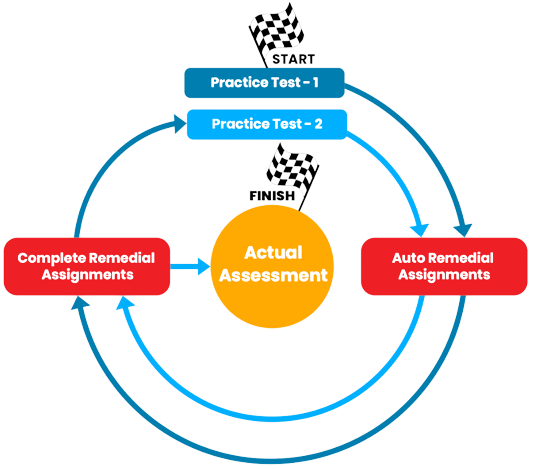
    Lumos Smart ATLAS Test Prep Methodology
    1

    Your students start with the first ATLAS-like online practice test to evaluate their proficiency across various standards.

    2

    Based on your student’s performance, the online program automatically assigns remedial practice to address individual learning needs.

    3

    Students work on targeted remedial practice at their own pace, with options to configure it at or even below their grade level.

    4

    Later in the year students take the second practice test serving as a formative or benchmark assessment to gauge their mastery and progress.

    5

    Finally, students complete auto-remedial assignments, ensuring comprehensive skills mastery before the actual ATLAS test.

    Request Free Samples

    Unlock Personalized Learning Magic With the New Lumos AI Tutor

    • Tailored Practice: Offers your students step-by-step guidance to master challenging math and ELA concepts, enhancing both comprehension and confidence.
    • Engaging Explanations: Promotes problem-solving by using student-friendly language to simplify the questions, without revealing answers outright.
    • Concept Mastery: Provides detailed concept explanations relevant to each question to deepen understanding.
    • Multilingual Support: Translates content into languages like Spanish, broadening accessibility.
    • Personalized Feedback: Offers corrective feedback and personalized improvement tips, fostering a supportive and motivating learning environment.

    Frequently Asked Questions (FAQ) About Arkansas Teaching & Learning Assessment System (ATLAS)

    ATLAS is a computer-based standardized assessment measuring Arkansas student progress in grades 3-10 against Arkansas State Standards in English Language Arts (ELA), Mathematics, and Science.

    The ATLAS Test is typically administered annually, with specific testing dates determined by the Arkansas Department of Education.

    • Tracks student learning: Provides valuable insights into individual and group performance, informing instructional decisions and interventions.
    • Monitors school and district accountability: Contributes to school and district accountability under the Every Student Succeeds Act (ESSA).
    • Measures college and career readiness: Helps identify areas where students need additional support to be prepared for future success.
    • Informs curriculum and instruction: Guides curriculum development and instructional strategies to align with assessed Arkansas State Standards.

    The ATLAS Test covers English Language Arts and Mathematics for grades 3-8. High school students may take subject-specific end-of-course assessments.

    While ATLAS is not about test prep, you can help students become familiar with the format and types of questions by:

    • Providing practice tests: Lumos Learning offers online ATLAS practice tests for most grades and subjects.
    • Discussing question types: Familiarize students with the range of question formats like multiple choice, short answer, and extended response.
    • Building critical thinking skills: Encourage students to analyze information, solve problems, and justify their answers.
    • Creating a positive testing environment: Emphasize the importance of learning and growth over test scores.

    ATLAS features a variety of question types, including:

    • Multiple-choice: Assessing basic knowledge and comprehension..
    • Constructed response: Requiring students to explain their thinking and demonstrate deeper understanding.
    • Performance tasks: Involving real-world applications of content and skills.
    • Technology-enhanced items: Utilizing interactive components and multimedia resources.

    Please check the official Arkansas Department of Education (ADE) ATLAS website or contact your local education authority for the ATLAS recent blueprint release date.

    • Clear and concise reports: Using parent-friendly language and highlighting individual strengths and areas for growth.
    • Data-driven meetings: Engaging parents in conversations about their child’s progress and potential support strategies.
    • Community outreach: Sharing school-wide ATLAS results and improvement initiatives with the broader community.

    Stay informed about the latest ATLAS Test blueprint by regularly checking official documentation. Look for any revisions, updates, or changes to the test structure and content that may impact preparation and instruction.

    Students with disabilities may be eligible for accommodations such as extended testing time, alternative formats, assistive technology, or other modifications. Ensure compliance with Arkansas Department of Education guidelines for accommodations.

    • Strategic Planning and Goal Setting: Utilize data to set specific and measurable goals for school improvement initiatives, focusing on areas with the greatest achievement gaps or room for growth.
    • Resource Allocation: Allocate resources based on data-driven insights, directing support towards areas with the greatest potential for impact and closing achievement gaps.
    • Equity and Closing Achievement Gaps: Use data to identify and address achievement gaps between different student groups, promoting equitable outcomes for all students.
    • Continuous Improvement: Monitor progress towards improvement goals by regularly analyzing ATLAS data over time and adjusting strategies as needed.
    • Identify Professional Development Needs: Analyze data across grades, subjects, and student groups to pinpoint areas where teachers require additional support or specific training interventions.
    • Targeted Professional Development: Design professional development opportunities tailored to data-driven insights, focusing on areas with the most significant needs.
    • Collaborative Data Analysis: Facilitate data-driven discussions among teachers to share best practices, develop targeted instructional strategies, and monitor progress.
    • Measure Professional Development Effectiveness: Track the impact of professional development initiatives by analyzing changes in student performance on subsequent ATLAS assessments.
    • Secure Testing Environment: Maintain controlled access to testing areas, monitor student activity, and secure all test materials and equipment.
    • Technology and Accessibility: Ensure proper functioning of testing devices, internet connections, and accessibility tools for students with disabilities.
    • Standardized Procedures: Adhere to established protocols for test administration, including pre-test briefings, time limits, and handling irregularities.
    • Data Accuracy and Security: Implement accurate student registration, secure data collection and verification, and timely submission to the Arkansas Department of Education (ADE).
    • Professionalism and Ethics: Maintain confidentiality of test materials and data, treat all students fairly, and uphold professional ethical standards throughout the process.
    • Identify individual needs: Analyze student performance data to pinpoint areas where specific students need additional support or differentiated instruction.
    • Targeted interventions: Develop targeted lessons and activities to address individual learning gaps and strengths.
    • Formative assessment: Monitor student progress throughout the year to adjust instruction as needed.

    *Note:

    Schools that implemented Lumos Learning’s program for at least 45 minutes per subject each week throughout the school year reported a 10–15% improvement in state test scores in 92% of cases, based on customer surveys. These results are indicative of the program’s effectiveness when used with fidelity. However, individual school and student outcomes may vary depending on factors such as the consistency of practice, completion of practice tests, engagement with auto-remedial assignments generated by the Lumos AI Tutor, and overall implementation quality.